By half past four, Sophie Marsh could usually feel it coming.
Her six-year-old, Jude, would come out of school buzzing and brittle all at once: too loud, too fast, then suddenly in floods of tears over the wrong colour cup. "It used to baffle me," she says. "He'd had a good day. Why was he falling apart?" It was only when someone explained it to her that it clicked: Jude wasn't being difficult. He was full. A whole day of noise, rules, friendships and concentration had filled him to the brim, and the meltdown was simply the overflow.
If you're parenting a child who gets anxious or easily overwhelmed, you'll recognise that overflow. The good news is that there's a lot you can do to help a child come back down, and most of it is gentle, free and simple. Here are some of the calming activities that tend to work best, and a little about why.
First, the helpful bit to understand
When a child is anxious or overstimulated, their nervous system has tipped into "alert" mode. Reasoning with them rarely works in that moment, because the thinking part of the brain has temporarily taken a back seat. What helps isn't a clever explanation. It's lowering the input and giving their body a way to settle. Calm is something children borrow from us first and learn to find for themselves later, so the aim of all of these is simply to help the body feel safe enough to switch back down a gear.
A couple of things are worth holding onto. There's no single fix that works for every child, so it's worth trying a few and noticing what your child reaches for. And you don't need to do any of it perfectly. A calm, steady grown-up nearby is doing more than any single activity.
Slow the breathing down
Long, slow out-breaths are one of the fastest ways to tell a wound-up body it's safe. Most children find "just breathe" useless, so make it a game:
- Bubbles. Blowing real bubbles forces a long, slow exhale without anyone having to think about it.
- Balloon breathing. Hands on the tummy, breathe in to "blow up the balloon," then let it slowly down.
- Trace a finger. Breathe in as you trace up one finger, out as you trace down the other side. Five fingers, five slow breaths.
Give the body something heavy to do
This one surprises a lot of parents. For an overstimulated child, gentle physical effort, what occupational therapists call "heavy work", is often deeply calming. Think pushing, pulling, carrying and squeezing:
- A big, firm hug (many children settle faster from pressure than from soothing words).
- Carrying something with a bit of weight: a basket of washing, a stack of books.
- Pushing against a wall as hard as they can for ten seconds, then relaxing.
- Burrowing under a heavy blanket or a pile of cushions.
Make a calm-down corner
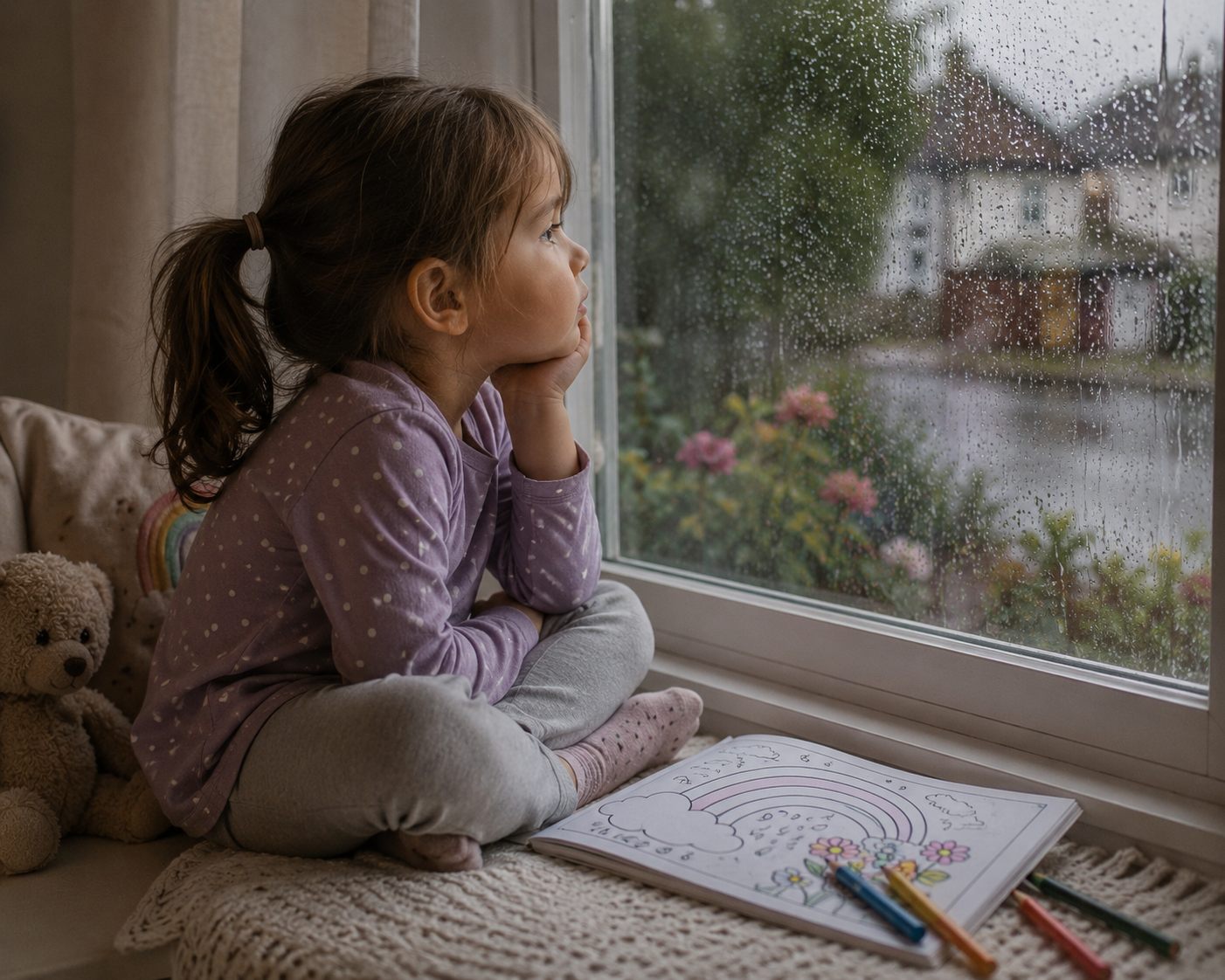
Overstimulation is, at its heart, too much input. A small, low-stimulation space gives a child somewhere to retreat before they boil over: a corner with cushions, a soft blanket, dimmed lights, maybe a favourite book or a couple of fidget toys. Crucially, it isn't a punishment or a "naughty step." It's their safe harbour, somewhere they can choose to go when the world gets loud.
Get outside
Few things reset an overwhelmed child like fresh air and open space. A walk, time in the garden, throwing a ball, splashing in puddles. Outdoor time discharges pent-up energy, and the natural world is gently, automatically calming. Even ten minutes often takes the edge off.
Quiet, repetitive, hands-on activities
This last group does a lot of quiet work. Slow, repetitive, low-pressure activities are naturally regulating, because they're absorbing without being demanding: there's no right answer, no competition, nothing to get wrong. The hands stay busy and the mind has room to settle:
- Playdough, kinetic sand or water play.
- Threading beads or simple craft.
- Drawing, doodling and colouring in.
Colouring earns its long-standing reputation here. It's predictable and screen-free, it gives restless hands a focus, and the steady, rhythmic motion helps an overstimulated child slow down without being told to. It's a brilliant thing to keep within easy reach for the after-school wobble or the over-tired evening.
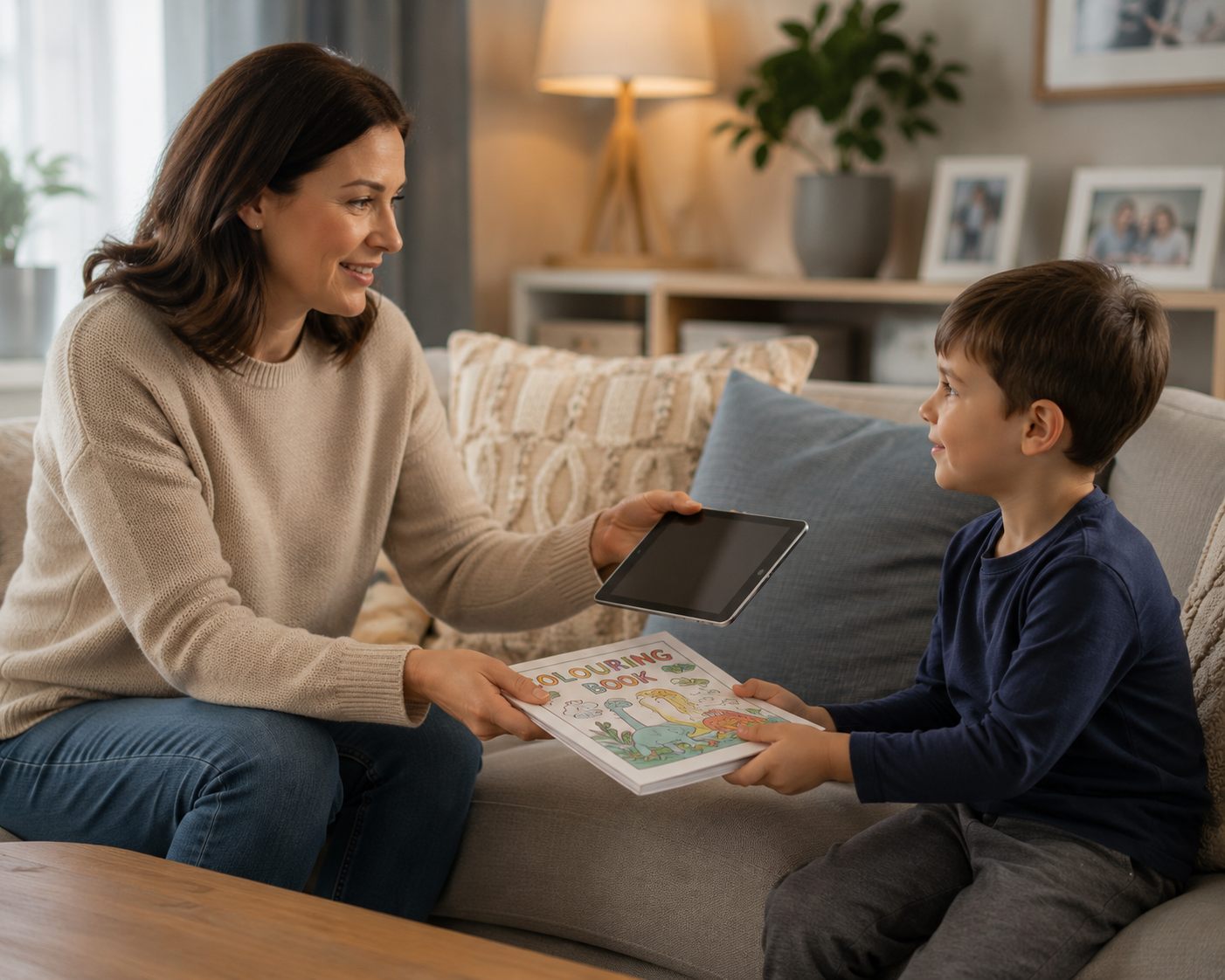
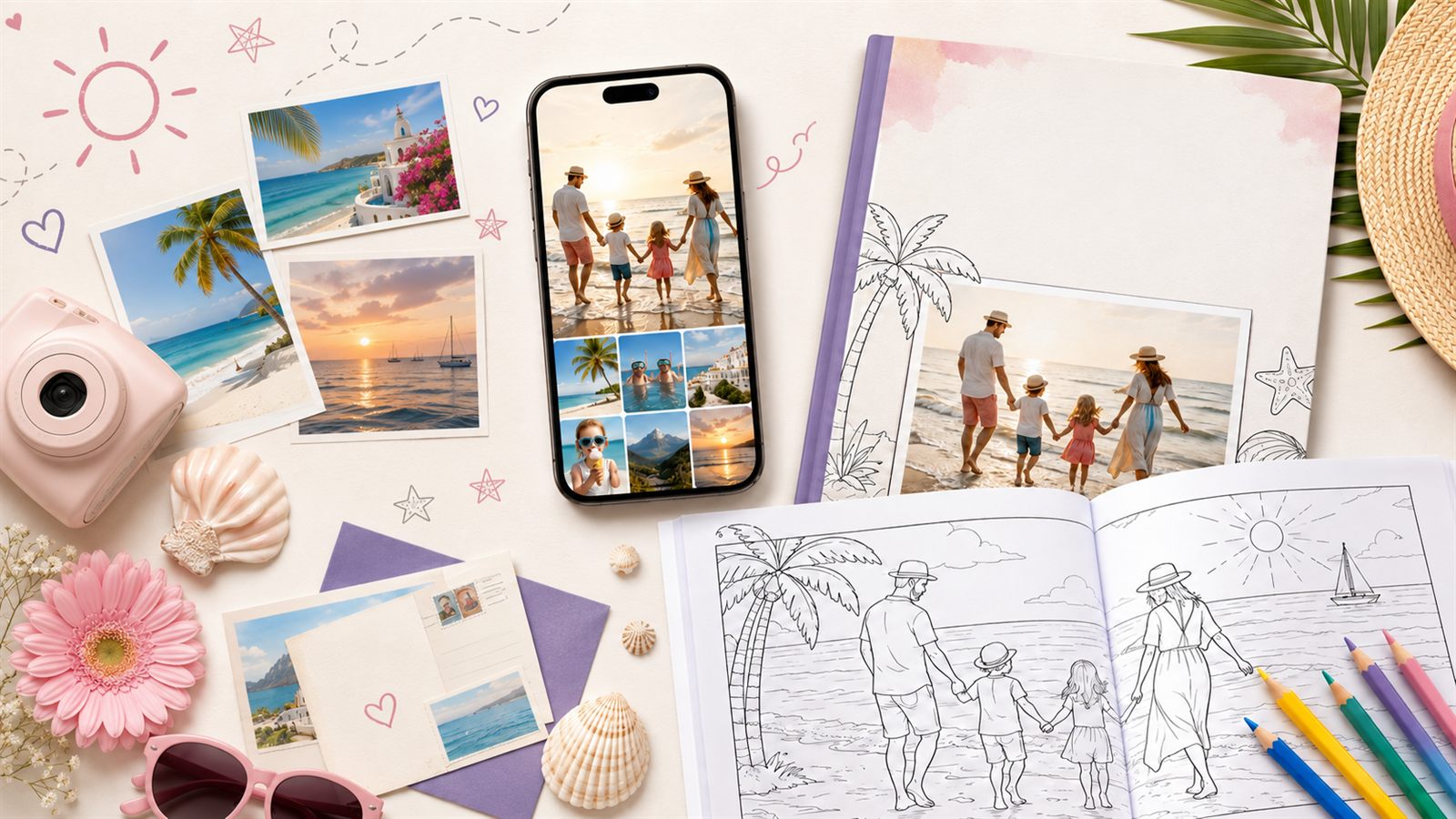
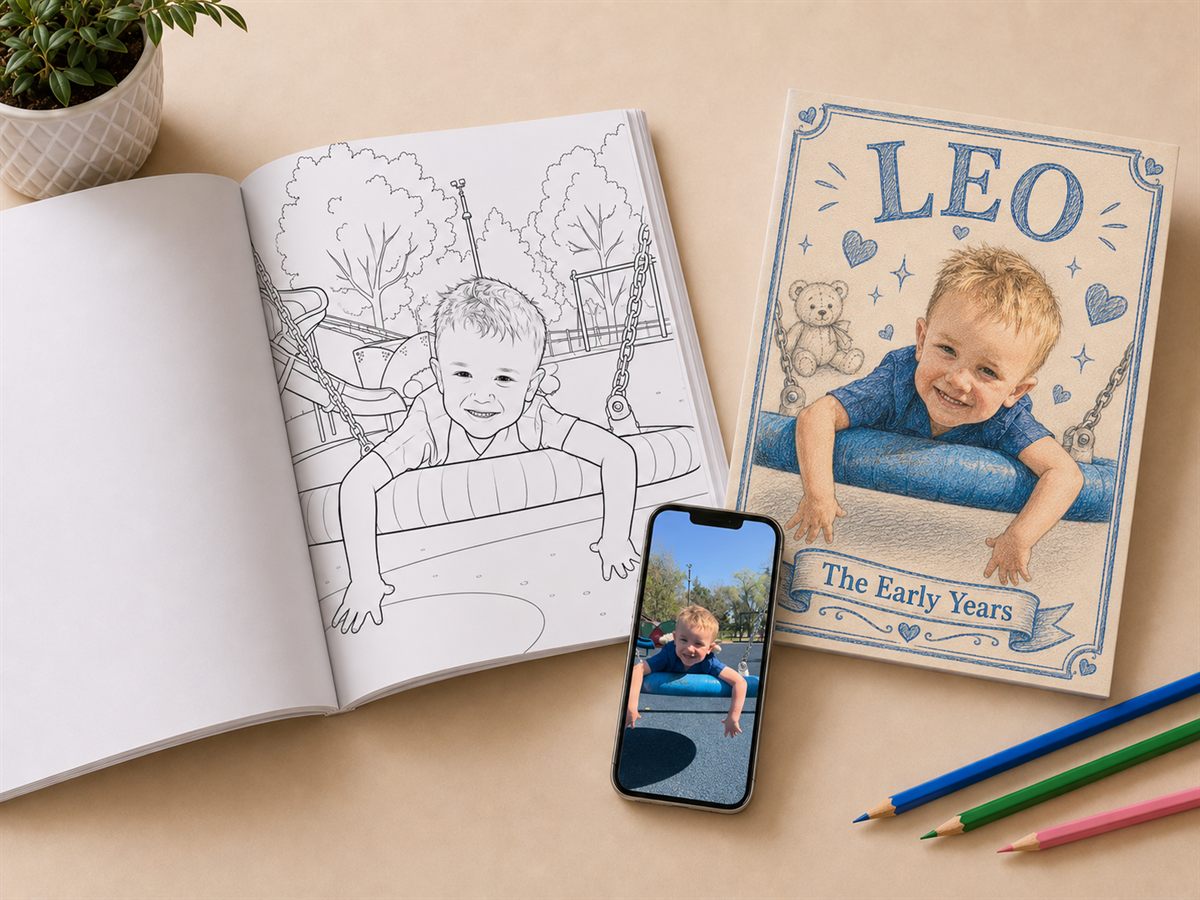
One gentle idea we love: a colouring book made from your own family photos. The familiar faces (a sibling, the grandparents, the family dog) tend to hold a child's attention a little longer, and there's something settling about colouring in your own happy memories rather than a stranger's cartoon. It's the same calm, hands-on activity, made personal. (It's also a welcome alternative to handing over a tablet, which tends to wind an already-overstimulated child up rather than down.)
Name the feeling, gently
Children often can't calm down because they don't understand what's happening inside them. Quietly naming it, "your body feels really full and fizzy right now, doesn't it?", does two things: it helps them make sense of the feeling, and it tells them you're not cross, you're alongside them. You're not trying to talk them out of the emotion, just letting them know it's allowed and it will pass.
A word on when to look for more support
All of the above is everyday, normal parenting of a sensitive or easily-overwhelmed child, and most overstimulation is exactly that: normal, and something children gradually grow more able to manage. But if your child's anxiety feels persistent, is getting in the way of everyday life, or you're simply worried, there's no need to navigate it alone. A GP, health visitor or your child's school can be a good first port of call, and asking for guidance early is always a sensible, caring thing to do.
The thing to hold onto
Sophie's afternoons look different now. The meltdown still turns up sometimes, but she's stopped treating it as a battle to win and started treating it as a signal: he's full, let's help him empty out a bit. Some days that's a walk, some days it's a hug and a hot chocolate, and a lot of days it's the pair of them at the table with the pens out, not talking much, just colouring until the world feels manageable again.
That's really the whole aim. Not to stop children ever feeling overwhelmed, because they will; they're small people in a big, loud world. It's to give them, and you, a few gentle, reliable ways back to calm.
At PicBooks, we turn your family photos into a personalised colouring book: a calm, screen-free activity to keep on hand for the moments your little one needs to wind down. Printed and posted across the UK from £10.99 with free delivery. Upload your photos and preview your pages; you only pay when you're happy.
Turn Your Photos Into a Colouring Book
Upload your favourite photos and preview your pages in minutes. Printed and posted across the UK from £10.99 with free delivery, and you only pay when you love it.
✨ Create Your Book