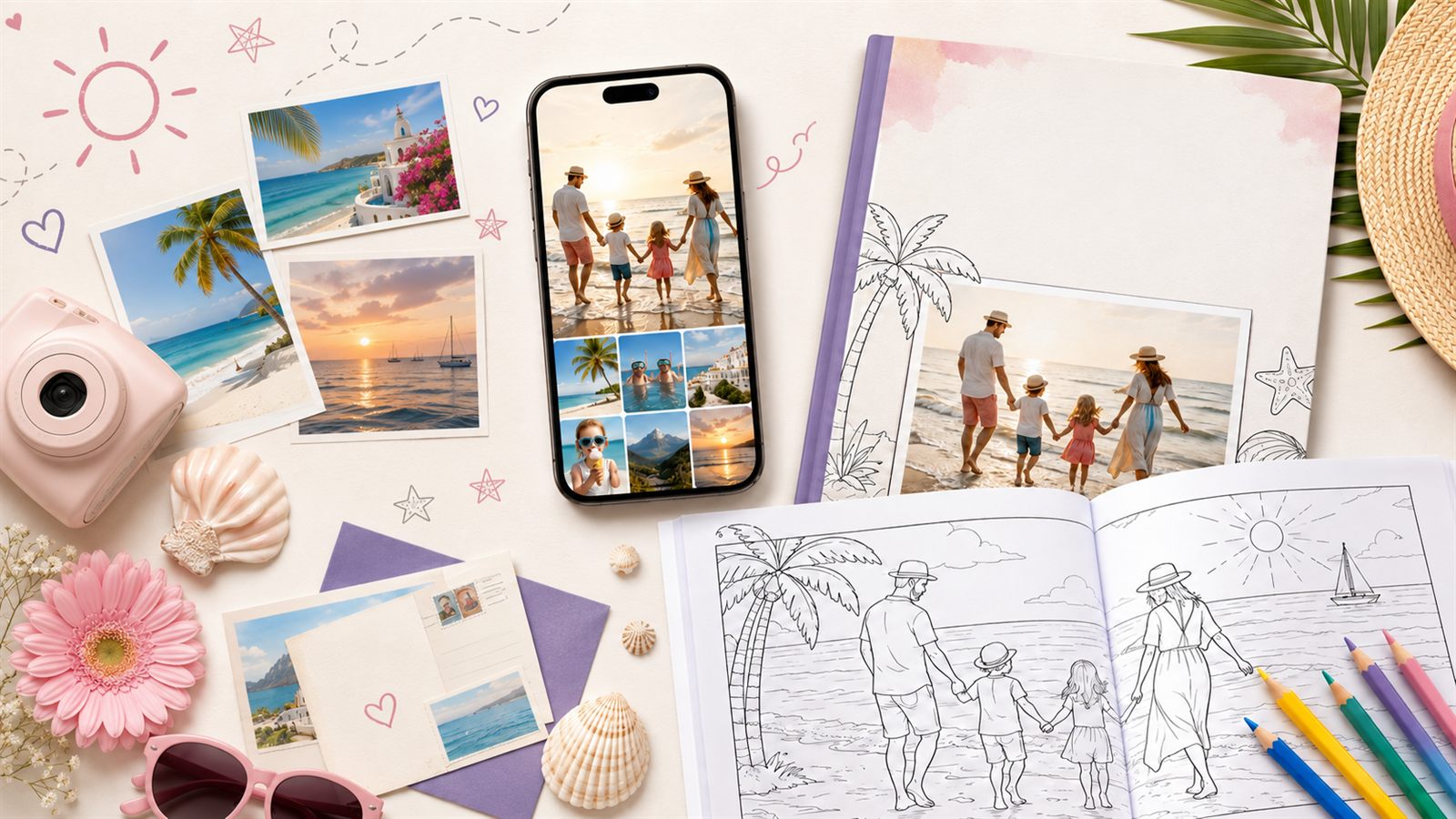
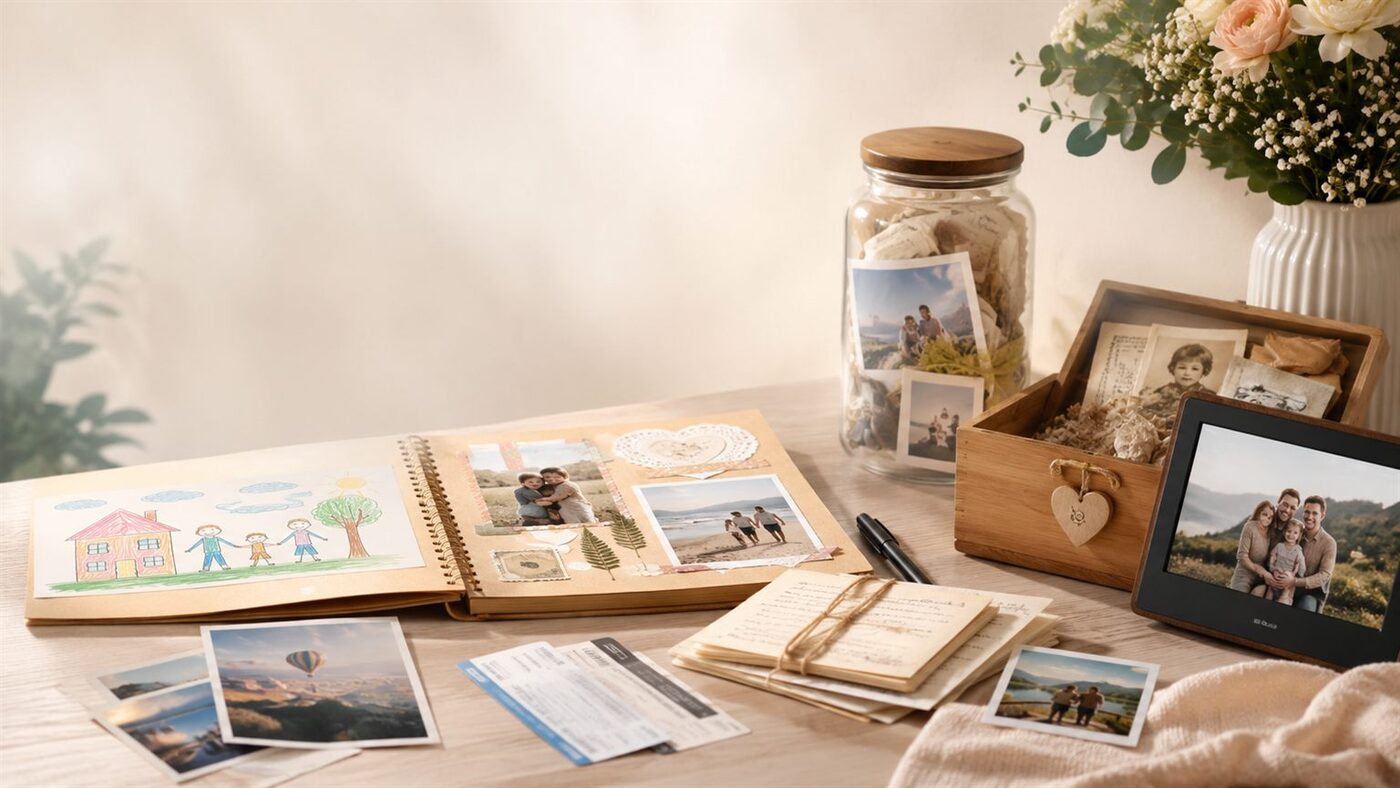
Sarah Doyle has 14,302 photos on her phone. She knows the exact number because last week the storage warning popped up for the third time that month, and she sat on the edge of her bed scrolling back through them, meaning to delete a few hundred to make room.
She didn't delete any. Instead she lost forty minutes to a single afternoon from three summers ago: her daughter Mia, then four, covered head to toe in sand on a beach in Pembrokeshire, grinning with no front teeth. Sarah hadn't seen that photo since the day she took it. "I'd forgotten it existed," she says. "And I take pictures of her constantly. That's the strange part. I've documented everything and remember almost none of it."
If that sounds familiar, you're not alone. The average person now takes thousands of photos a year and looks back at almost none of them. Our most precious moments aren't lost, exactly. They're just buried, somewhere between a screenshot of a parking ticket and nine near-identical shots of the same sunset. The camera roll has quietly become the place memories go to be stored and then never seen again.
The paradox of taking more and remembering less
Here's the awkward part. We take all these photos to remember, but the act of constantly photographing things may actually be eroding the memories themselves.
Psychologists have a name for it: the photo-taking impairment effect. In studies where people were guided around a museum and asked to photograph some objects while simply observing others, those who reached for the camera consistently remembered less about the items they'd photographed. The theory is that the brain quietly offloads the job of remembering onto the device. The phone's got this, some part of us decides, so I don't need to.
There's a second cost, too: presence. When you're framing the shot, checking it came out, maybe nudging everyone to do it again because someone blinked, you're not actually in the moment any more. You've stepped slightly outside it to manage it. Anyone who has watched an entire concert through the small bright rectangle of the person in front of them knows the feeling.
This isn't an argument for never taking a photo. Photos are wonderful. Used well, a single image can pull you straight back into a moment: the warmth of the day, who you were sitting next to, the joke that had everyone laughing. The problem isn't taking pictures. It's taking hundreds and then leaving every last one trapped behind glass.
The memories you don't realise are at risk
There's also a quieter danger that most of us never think about until it's too late: a camera roll is far more fragile than it feels.
Tom and Priya Sharma found this out the hard way. Tom's phone went into a hotel swimming pool on the second day of their honeymoon in Crete. The phone was insured; the photos weren't backed up. Two days of a once-in-a-lifetime trip, gone. "It's such a small, stupid thing," Tom says. "But every now and then I think about a particular evening, this little restaurant up a hill, and there's just nothing. No photo, and now the memory's going fuzzy too. I keep meaning to ask Priya if she remembers the name of the place."
Phones get dropped, lost and stolen. Cloud accounts get full, forgotten, or locked behind a password no one can recall a decade later. File formats change. Accounts get deleted. The grim irony of the digital age is that a photo printed in 1975 and tucked in a shoebox is, in many ways, safer than one taken last week and left in the cloud. Your grandmother's wedding album still works perfectly. It needs no charger, no subscription, no Wi-Fi.
Why something you can hold feels different
Ask anyone who has lost a relative what they'd grab from a burning house, and most say the same thing: the photos. Not the phone. The physical, printed photos.
There's a reason for that, and it isn't just nostalgia. A printed image is something you encounter on purpose. It sits on the mantelpiece, in the hall, on the fridge, and you see it every single day, often without trying. It gets passed hand to hand around a kitchen table. A toddler can hold it without you panicking about a cracked screen. A grandparent who finds a phone baffling can pick it up and immediately be transported. It invites you to slow down and actually look, which is exactly the thing the endless scroll never lets us do.
When Sarah Doyle finally turned a handful of her favourites into something physical, the change she noticed wasn't really about the pictures. "Mia goes back to it again and again," she says. "She points at herself and tells me the story of the day, even though she was too little to actually remember it. The photos on my phone never did that. They just sat there."
That's the real case for getting your memories off your phone. Digital isn't bad, but a memory you can hold, and return to, and share, and pass on, is a memory that stays alive.
A small, lovely place to start
You don't have to print all 14,000. That's the trap, really: it feels so overwhelming that we never begin. So choose. Pick the ten, twenty, thirty moments that make you smile when they surface, the sandy beach grin, the honeymoon dinner, the dog as a puppy, the wedding day, and give them a life off the screen.
And it doesn't have to be the same old frame or photo book, either. One of our favourite ways to bring photos back to life is to turn them into something you actually do, rather than just something you look at. A personalised colouring book made from your own photos takes your best moments off the camera roll and turns them into pages you sit down with, colouring in your daughter's beach day, your wedding, last summer's holiday, one quiet evening at a time. No scrolling, no screen, just time spent together over something you made.
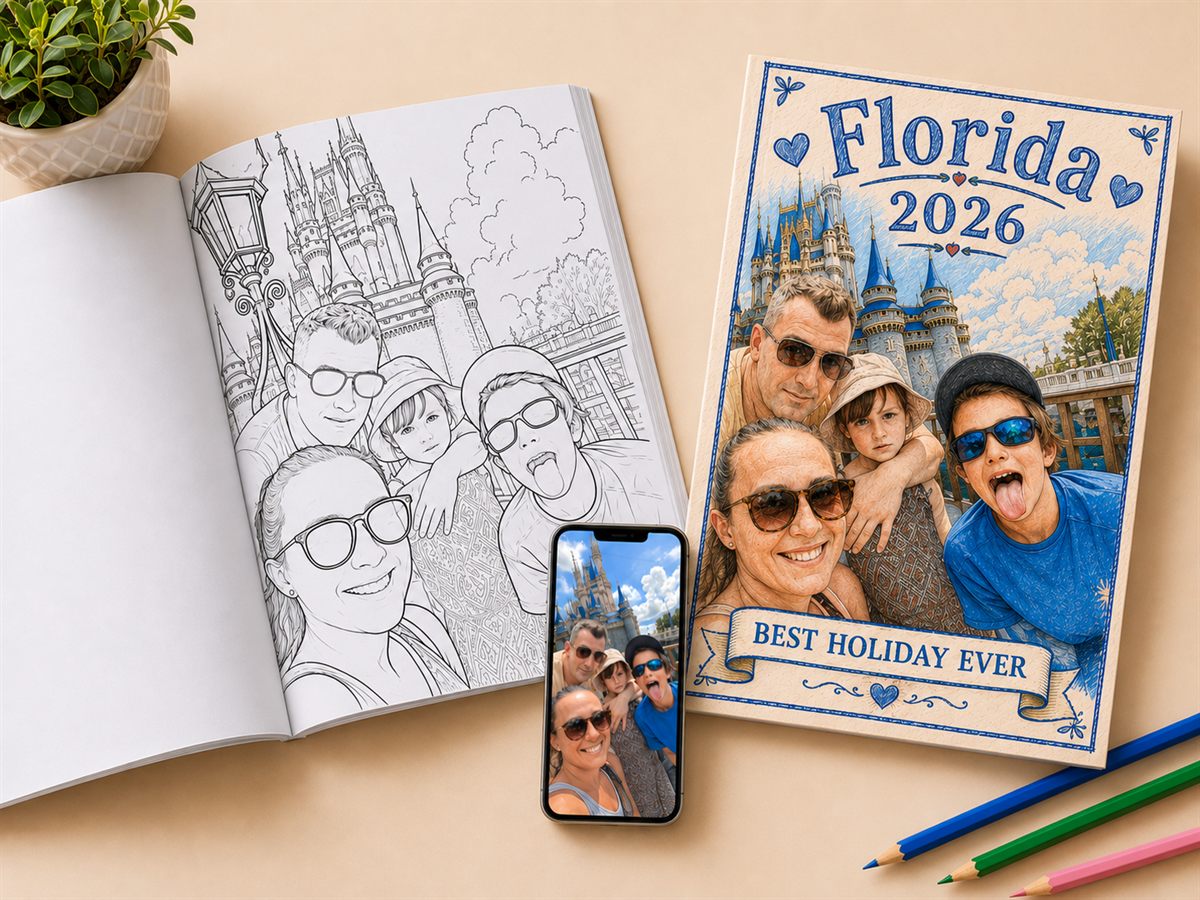
Whatever you choose, the point is this: don't let your best days spend the rest of their lives behind a piece of glass. Pick a few. Get them out into the world. Future you will be so glad you did.
At PicBooks, we turn your favourite photos into beautiful personalised colouring books, printed and posted across the UK from £10.99 with free delivery. Upload your photos and preview your pages, and you only pay when you're happy.
Turn Your Photos Into a Colouring Book
Upload your favourite photos and preview your pages in minutes. Printed and posted across the UK from £10.99 with free delivery, and you only pay when you love it.
✨ Create Your Book